
Turkey signs US grant deal to prepare for small nuclear reactors
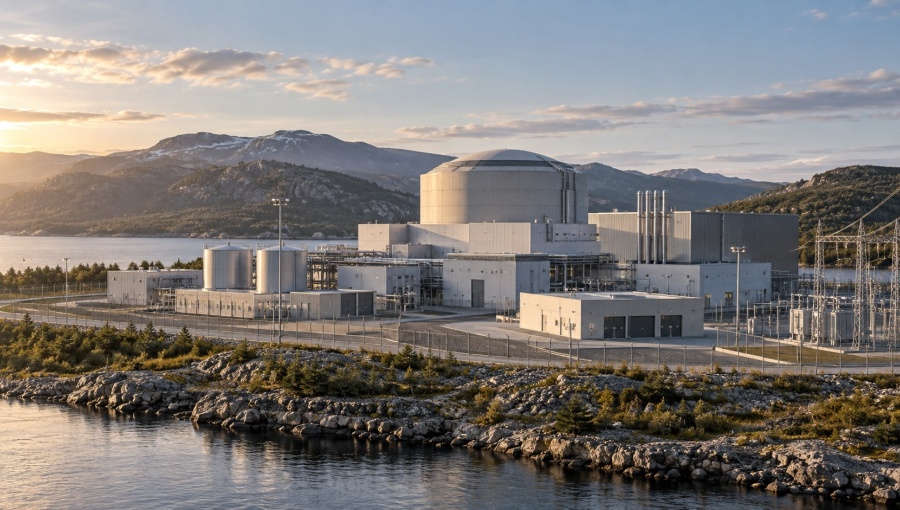
The US will pay for a study to help Turkey prepare the ground for small modular nuclear reactors (SMRs), as Ankara looks to cut its reliance on Russia for nuclear power.
The US Trade and Development Agency (USTDA) signed a grant agreement with Turkey's state-owned nuclear developer TUNAS in New York on September 22, the agency said. Energy Minister Alparslan Bayraktar and USTDA Deputy Director Thomas Hardy oversaw the ceremony, Al-Monitor reported the same day.
The deal opens the door to US reactor vendors in a country whose only nuclear plant is being built by Russia's state nuclear corporation Rosatom, and turns into a signed contract what Hardy trailed in July, when he told a Washington roundtable to watch for USTDA nuclear announcements in Turkey.
The grant will fund technical assistance for TUNAS to draw up the regulatory, institutional and financial rules Turkish private companies would need to deploy SMRs, and will assess how leading US reactor designs could meet Turkey's needs. No value was disclosed, but the work is a study costing around $2mn that will run for at least a year, according to Turkish business broadcaster Bloomberg HT.
"Our goal is to advance TUNAS' efforts to create conditions for deploying SMRs, which can increase energy security for Turkiye while providing opportunities for US companies," said Hardy.
"USTDA's program would certainly help strengthen our technical and institutional foundations for future SMR and advanced reactor projects," Bayraktar said, and wrote on X: "We are determined to diversify our energy mix."
Bayraktar said in November 2025 that Turkey aims to have 12 large conventional reactors and 5,000 MW of SMR capacity by 2050, enough for nuclear to supply 10-15% of the country's electricity. A parliamentary committee in July approved tax incentives for nuclear investments, including VAT refunds on plant construction until the end of 2045.
The roughly $20bn Akkuyu plant in Mersin province on the Mediterranean coast is being built by Rosatom under a build-own-operate model and will have four reactors with a combined 4,800 MW. Rosatom said in June that construction of the first unit was complete and testing had begun, and Ankara is aiming for first power this year after delays of two to three years.
Turkey is seeking partners for eight more conventional reactors, four at Sinop on the Black Sea and four in the northwestern Thrace region, and Bayraktar has said Ankara is in talks with South Korea, Canada, China and Russia.
In March Ankara asked Seoul and Korea Electric Power Corp. (KRX: 015760) for a binding proposal for a Black Sea plant, and Bayraktar said Turkey could sign an SMR memorandum with France's EDF. On September 8 Turkey signed a thorium research deal with Denmark's Copenhagen Atomics, a molten salt reactor developer.
USTDA will invite proposals from US companies to carry out the TUNAS work. Hardy said in July that the agency's job is to "seed the ground" so countries can make investment decisions once SMRs are ready for fleet deployment.
Follow us online