

Pentagon takes stake in Venezuelan oil venture as details of Trump's deal emerge
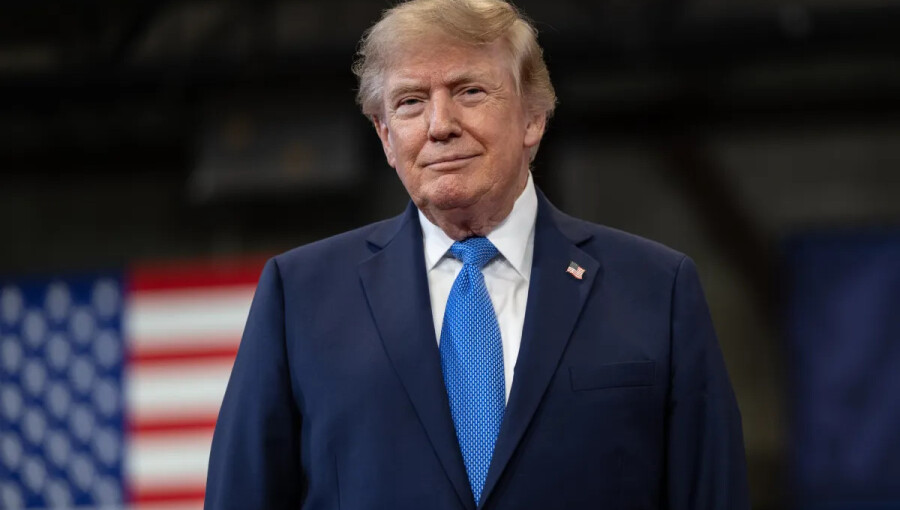
The White House has set out the architecture of the sweeping US-Venezuela oil agreement President Donald Trump unveiled last week. In a fact sheet released on August 31, it confirmed that the Pentagon's investment arm would take a stake in the private Venezuelan operator chosen to run it, headed by a controversial businessman who has twice been arrested in the UK over money-laundering and embezzlement allegations he denies.
The operator, North American Blue Energy Partners (NABEP), is led by Alejandro Betancourt López, a 46-year-old Venezuelan tycoon with two decades of ties to the country's governing elite. His company was named publicly for the first time as Washington's chosen partner in a venture that grants it 100-year concessions over 17 oil fields holding an estimated 65bn barrels of crude, equivalent to roughly a fifth of Venezuela's proven reserves.
Under the terms disclosed by the White House, the Office of Strategic Capital – an investment arm of the Pentagon, now formally the Department of War – would hold a 35% stake in NABEP's parent company "at no cost to the American taxpayer." The State Department separately secured the right to buy a fifth of the venture's output at production cost, plus first refusal over the remaining 80%, terms designed to guarantee Washington a supply of discounted Venezuelan crude for its depleted Strategic Petroleum Reserve and for military use.
The disclosure, just days after Trump first touted the pact on social media as "the biggest oil deal in world history," fills in gaps that had fuelled confusion and speculation since August 28, when neither government named the Venezuelan counterparty or clarified how the arrangement would work. Yet it does not resolve every question: officials in Washington and Caracas did not release the underlying contract, decree or licence, and several figures in the public statements sit awkwardly alongside one another.
A controversial partner
Betancourt's rehabilitation has been rapid. British police detained him twice last year, in September 2025 on a Spanish warrant alleging money laundering and tax fraud, and again two months later after Swiss prosecutors sought his arrest as part of a probe into alleged embezzlement from the state oil company PDVSA. For much of this year he was effectively unable to leave London, where he has long been based, while contesting possible extradition to Switzerland. He has not been formally charged in any of the three jurisdictions, and Sara Chouraqui, NABEP's general counsel, said in a statement quoted by the NYT that "Mr Betancourt has never been charged with a crime in any jurisdiction."
It was Secretary of State Marco Rubio personally who wanted him freed up to work on the Venezuela talks, the New York Times reported, citing a person familiar with the effort; State Department officials subsequently lobbied their Swiss and British counterparts to relax the curbs on his movement.
Betancourt built his early fortune under the Chávez government through Derwick Associates, an electricity contractor he founded in the early 2010s that, according to El País, won at least 11 state contracts worth some $5bn to build thermoelectric plants "without having the slightest experience" and "without any competitive bidding." He later built NABEP into Venezuela's second-largest private oil producer, currently pumping more than 200,000 barrels a day, a figure the company says it aims to lift above 1mn b/d with the fresh investment. Thomas Posado, a Venezuela specialist at the University of Rouen, told France 24 that Betancourt embodies the archetype Venezuelans call a "bolichico," part of a business class "whose immense fortunes depend entirely on the goodwill and favours of the government, whether during the era of Hugo Chavez or Nicolas Maduro." Tom Long of the University of Warwick said Betancourt appears to enjoy the trust of Interim President Delcy Rodríguez, a position "really dependent on relationships with the state" rather than on any formal role. Betancourt himself said in a statement that the deal would unleash Venezuela's potential "to the great benefit of both Venezuelans and Americans."
Contradictions in the fine print
The Pentagon's exact role has proven hard to pin down. The New York Times reported that the 35% stake would in fact take the form of "penny warrants," a right to buy shares at a token price, sometimes just a single cent, rather than a straightforward shareholding, and one the Pentagon office is not obliged to exercise. That detail sits uneasily with a statement the Pentagon's chief spokesman, Sean Parnell, gave on August 29 insisting the office's "role is strictly limited to providing capital assistance in the form of a loan, loan guarantee, or technical assistance" and that it "cannot take any ownership stake in private companies.”
The numbers also evolved. The Associated Press had initially reported, citing an unnamed US official close to the original announcement, that Washington's effective share of the venture's output would be 55%; this week's more granular breakdown, a 35 % equity stake plus a guaranteed right to buy a further 20% of output at cost, adds up to the same figure, suggesting the two accounts describe the same arrangement rather than a change of terms. Less easily reconciled is the mismatch between the 100-year concessions granted to NABEP over the individual fields and Rodríguez's own account, given in a televised address on August 30, that the wider agreement would run for 25 years, during which Venezuela would collect a minimum royalty of 16% and income tax of 34%. Neither government has explained how the two timeframes relate to one another.
Analysts at UBS's chief investment office noted that a venture requiring billions of dollars in US government backing may need congressional sign-off, and that opinion polls point to Democratic gains in the legislature at midterm elections in November, leaving no guarantee lawmakers would support the deal. The bank's team, led by chief investment officer for emerging markets Alejo Czerwonko, wrote in a note that the administration could instead structure the arrangement as an executive-branch partnership requiring no congressional vote, though that route "would be vulnerable to a possible change in the executive branch in 2028," and added that legal challenges in US courts "cannot be ruled out either."
Reasserting the Monroe Doctrine
The White House statement framed the deal explicitly in geopolitical terms, saying most of the fields being handed to NABEP "were previously controlled or operated by Russian and Chinese firms, or by corrupt cronies of Maduro and Chavez," and declaring that Trump "has re-established the Monroe Doctrine, purging foreign malign influence from our backyard." Among the assets changing hands, according to Guacamaya, a Caracas-based oil-focused outlet, are Lake Maracaibo operations formerly run by China Concord Petroleum, a private Chinese firm, and the Intercampo Norte field, previously operated by China's state-owned CNPC.
Two further fields tied to Russian and Chinese state firms – Petromonagas and Petrolera Sinovensa, together producing close to 200,000 b/d – have a less certain future, and officials in Moscow and Beijing have so far stayed quiet on exactly what their state companies stand to lose. In a first sign of pushback on September 1, Guo Jiakun, a spokesperson for China's foreign ministry, stated that “the cooperation between China and Venezuela is protected by international law and the laws of both countries, and China's lawful rights and interests in Venezuela must be protected,” according to Xinhua.
Washington’s framing, meanwhile, carries some irony: before NABEP, Betancourt's companies had worked the same Lake Maracaibo basin through a joint venture with Gazprombank, the lending arm of Russia's state gas company, Guacamaya noted.
Whether the oil will flow
Even if the terms hold, analysts are sceptical the deal will move quickly. Writing in The Conversation, Sahara Hoff, a research associate at the University of Sydney's United States Studies Centre, pointed out that the 65bn barrels covered by the arrangement dwarfs the roughly 718.6mn barrels currently sitting in US strategic stocks, and cautioned that Trump's promise of lower fuel prices is unlikely to be fulfilled soon. Petrol prices have risen 37% and crude oil more than 20% since the war with Iran effectively shut down shipping through the Strait of Hormuz in March, while food prices are running 3% above year-ago levels and still climbing.
Venezuela's oil sector currently accounts for just 1% of global production after two decades of underinvestment, ageing infrastructure and crippling US sanctions; Chevron remains the only US major that never left the country following its 2007 nationalisation of oil assets by then-president Hugo Chavez, and is separately negotiating an expansion of its own operations there.
But Rystad Energy estimates it could take until the mid-2030s simply to restore Venezuela's existing fields to full output, while developing new fields could require upwards of a decade and at least $100bn. Aslak Orre, a Venezuela expert at Norway's Chr. Michelsen Institute, went further, telling France 24 that even tripling Venezuela's current output to match its historic 1970s peak would take "exactly 50 years to get 65bn barrels out of the ground," evidence, in his view, that the pledge amounts to "megalomaniac fantasies" rather than a serious production plan.
Speaking to the FT, Francesco Monaldi, director of the Latin America Energy Program at Rice University warned that “In the short term, there’s very little that can be done to increase production quickly, so this year will likely see an increase of less than 200,000 barrels.”
A further complication is the black gold's chemistry: America's strategic reserve was designed around light crude, while Venezuelan output is overwhelmingly heavy and extra-heavy, grades that require specialised refining, capacity that is already stretched thin by the Hormuz-related disruption.
UBS's analysts struck a similarly cautious note in their report, observing that Venezuelan oil output has risen by only 100,000-200,000 barrels a day in the roughly eight months since Nicolás Maduro's removal in January, a modest gain from what they called "a very low base." Absent a legal framework able to survive political turnover in both countries, they wrote, the agreement is "unlikely to result in materially higher foreign investment in Venezuela or a meaningful increase in oil production over the short to medium term."
Open legal questions
Several fundamental questions remain unanswered, according to UBS, which flagged the fields' allocation to NABEP without any competitive tender, a point also raised by Reuters. UBS's analysts questioned whether Rodríguez, as an interim president operating without a transparent bidding process, compliance safeguards or approval from the National Assembly, has the legal authority to bind future Venezuelan governments to a multi-decade contract, noting that the country's 1999 constitution declares hydrocarbon deposits "public-domain property" that is "inalienable," and reserves petroleum activity for the state. Reuters reported separately on August 31 that Chevron, along with India's ONGC, Italy's Eni, GeoPark and GE Vernova, were nearing their own, unrelated agreements with Caracas.
"[The Venezuelan oil] was this unbelievable value that was sitting dormant," Trump said during a press briefing on August 31. "But we're going to be taking all of that."
UBS called this an "extraordinary announcement, loaded with execution risks," summing up the overwhelming scepticism running through its note. But its analysts also added that Venezuela's evident willingness to lean on US capital and expertise for its reconstruction could still, in time, evolve into "a broader and lasting bilateral partnership," provided it is eventually grounded in legislation more solid than the statements issued so far.
Follow us online