
Indonesia pitches 5.5mn tonnes of mangrove carbon credits at COP31 before any exist

Indonesia unveiled three mangrove and seagrass carbon projects at the COP31 climate talks in Turkey on November 17, but none has yet produced a credit buyers can trade, Kompas reports.
Deputy Environment Minister Diaz Hendropriyono launched the schemes, in North Kalimantan, on Java's northern coast and in East Belitung, at the Indonesia Pavilion in Antalya. "Today, on behalf of the Government of Indonesia, I am pleased to announce the launch of three blue carbon projects and initiatives," he said.
Indonesia wants to sell itself as a supplier of high-quality nature-based offsets. This year's forest fires have put renewed attention on the integrity of Indonesian credits, while the flagship's headline number remains an estimate subject to independent validation.
The flagship is a 43,000-hectare mangrove project in North Kalimantan, funded with about $4mn through the World Bank's Mangroves for Coastal Resilience (M4CR) programme, with Denmark as donor, the state news agency Antara reports. Preparation has taken nearly four years since late 2022 and has produced a project description document setting out activity plans, benefit-sharing and community consent.
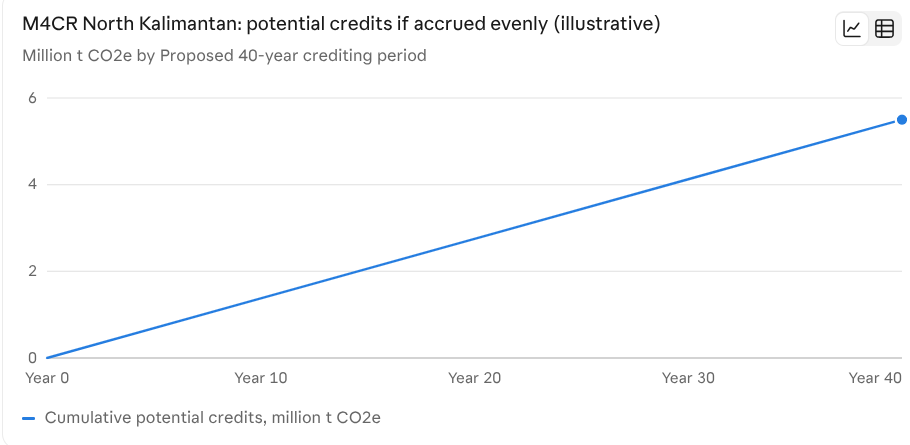
"This project employs the internationally recognised Verra verified carbon standard methodology, with an estimated potential of approximately 5.5mn tonnes of net CO2 equivalent carbon credits over the proposed 40-year crediting period, subject to validation and verification," said Nani Hendiarti, a deputy at the Coordinating Ministry for Food.
Spread evenly, that would come to about 137,500 tonnes a year, though forest carbon rarely accrues so tidily. No credits from the project have been issued or traded. The timeline for verified units to reach the global market, reported as late 2028 or early 2029 by a sponsored M4CR article in the Jakarta Post on November 6, remains unconfirmed. The same article put the project area at about 68,911 hectares across the Bulungan, Nunukan and Tana Tidung regencies, against Antara's 43,000 hectares.
Hendiarti said the programme is being entered in the national carbon registry, known as SRUK, and that nearly half the economic value generated by the blue carbon schemes will go directly to coastal communities.
The other two schemes, run by the Marine Affairs and Fisheries Ministry, put restoration ahead of trading. One covers 81,000 hectares on Java's crowded northern coast, where erosion and sinking land threaten towns and industry. The other covers 14,000 hectares of mangroves and seagrass around small islands in East Belitung, tied to the fish catches that local families depend on.
"Indonesia's blue carbon starts with restoration. Maintaining healthy ecosystems will yield climate benefits," said Koswara, a director general at the fisheries ministry.
Indonesia holds some 3.45mn hectares of mangroves and 660,000 hectares of seagrass, about 17% of the world's blue carbon reserves by the government's count. It presented a blue carbon roadmap at COP30 in Belem last year, adopted a national action plan for 2025-2030 in February and in June made four blue economy commitments aimed at drawing up to $260mn in foreign funding. The blue carbon launch is one item on a long list in Antalya, where Indonesia is showing 30 carbon projects, only two of them certified/
Norway agreed on November 11 to buy up to 12mn tonnes of emission reductions from solar projects run by state utility PLN, a deal Indonesian analysts warn could dent the country's credibility if the plants fall short. Carbon markets are taking shape across emerging Asia, and the world has about 3.5 years of emissions left before the 1.5C budget is spent.
At home, environmental group WALHI accused the government during the summit of breaking its climate pledges, counting about 74,000 hotspots across 30 provinces between August and October. A country selling credits for protecting mangroves will have to show that the protection holds.
Follow us online