
Ghana think tank launches year-long review of nuclear power investment readiness
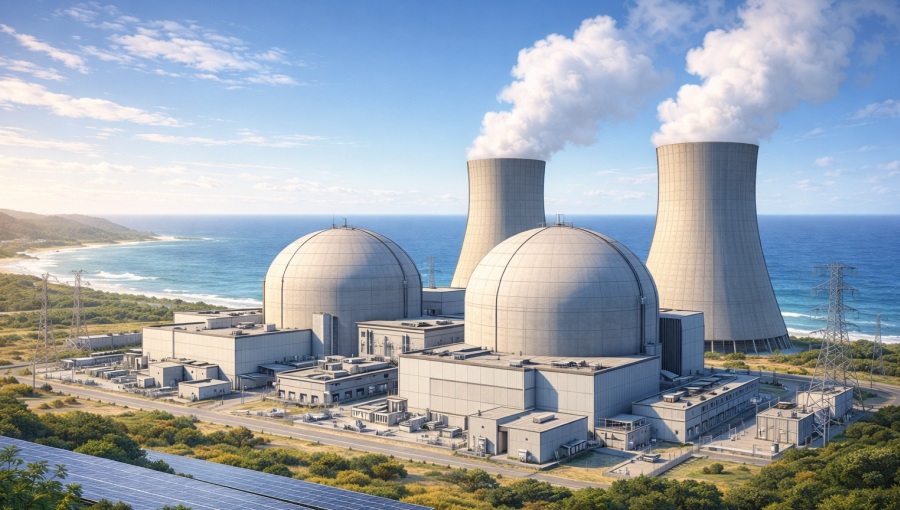
Ghana’s Institute of Economic Affairs (IEA), an independent public policy think tank, has launched a one-year assessment of the institutional, regulatory, workforce and financing requirements needed to advance the country’s nuclear power programme.
The Ghana Nuclear Phase II Completion and Investment Readiness Support Programme was launched at an inception workshop in Accra, the Ghana News Agency reported on October 30. It will support priority activities under the International Atomic Energy Agency’s (IAEA) framework for countries developing nuclear electricity generation.
Ghana is implementing Phase Two of the IAEA’s three-stage Milestones Approach, working towards readiness to invite bids or negotiate a contract for its first nuclear power plant. Then-president Nana Addo Dankwa Akufo-Addo formally approved the inclusion of nuclear power in the country’s energy mix in 2022, with Nuclear Power Ghana designated as owner-operator and the Nuclear Regulatory Authority as regulator. The IEA said its initiative would complement, rather than replace, the statutory responsibilities of the country’s nuclear institutions.
The work will be carried out by the IEA’s Nuclear Energy Centre of Excellence, which will assess institutional coordination, workforce capacity, regulatory preparedness and investment frameworks. Expected outputs include a prioritised Phase Two implementation and tracking framework, a nuclear workforce development blueprint, a regulatory and institutional readiness roadmap and a framework to inform future investment decisions. The institute did not disclose the programme’s budget or funding arrangements.
Stephen Yamoah, executive director of Nuclear Power Ghana, warned in March that the lack of funding for detailed site characterisation and an environmental impact assessment meant the project could not progress beyond Phase Two. In September, Environment, Science and Technology Minister Zanetor Agyeman-Rawlings told the IAEA General Conference that meteorological monitoring systems had been installed at the preferred and alternative sites and that site characterisation was progressing, but gave no details of funding for the outstanding studies.
Robert Sogbadji, a deputy director responsible for nuclear energy at the Ministry of Energy and Green Transition, told the workshop that the government had acquired a site in the Central Region for consideration for the plant, according to the Ghana News Agency. Ghana previously identified Nsuban in the Western Region as its preferred location and Obotan in the Central Region as an alternative. Sogbadji did not name the site, and no revised site-selection decision was announced.
The IEA announcement disclosed no construction contract, financing commitment or final investment decision. Separately, President John Dramani Mahama said on October 29 that Ghana had opened negotiations with Russia’s state nuclear corporation Rosatom to build the country’s first nuclear power plant, without giving a timetable, size or cost. The talks build on a memorandum of understanding between the Ghana Atomic Energy Commission and Rosatom, which Russia’s ambassador to Accra, Andrei Ordash, cited in July as a major step towards the plant.
Nuclear power remains a long-term option. For nearer-term supply, Energy and Green Transition Minister John Abdulai Jinapor said in August that the government planned to procure 1,200MW of state-owned combined-cycle thermal capacity by 2029. The IEA assessment is expected to continue into 2027.
See IntelliNews: Ghana opens talks with Rosatom on first nuclear power plant
See IntelliNews: Russia eyes Ghana as West Africa gateway after trade tops $800mn
See IntelliNews: Ghana plans 1,200MW state-owned thermal power expansion by 2029
See IntelliNews: Ghana’s president approves nuclear power as part of country’s energy mix
Follow us online